

Who’s Afraid of the Big Bad Bot? Turning AI Anxiety into Agency

In just a few years, artificial intelligence has shifted from a distant, somewhat futuristic concept to something we use every day. This rapid change brings a new challenge for many people: anxiety about what AI means for their work and wellbeing.

It is understandable that many employees are worried as AI becomes part of their daily work. For HR managers and team leads, addressing this anxiety openly is essential, not just for morale, but for protecting mental health and helping people do their best.
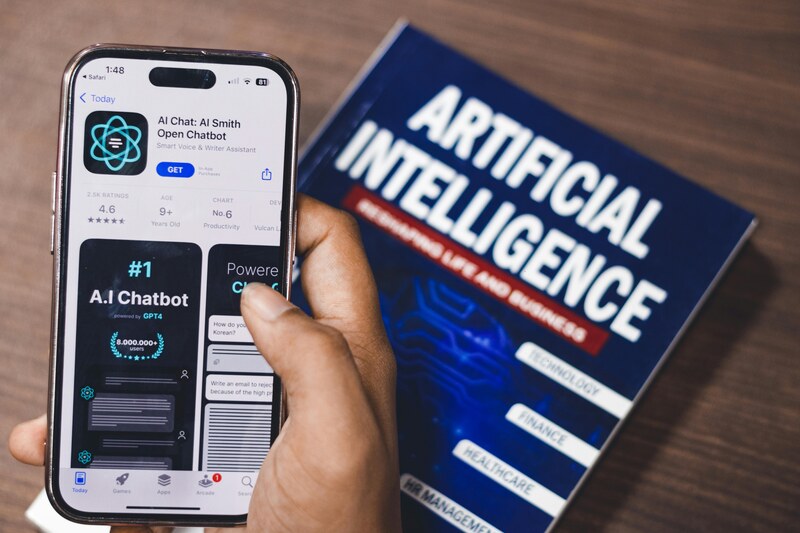
Artificial intelligence has shifted from a distant concept to something we use every day
In just a few years, artificial intelligence has shifted from a distant concept to something we use every day.

The 2026 AI Landscape

As of mid-2026, AI adoption has reached a new level. Recent data from the Writer 2026 Enterprise Survey reveals that 97% of executives have deployed AI agents in the last year, with 94% of the C-suite now using AI tools daily for at least 30 minutes.

This rapid adoption is not without its challenges. As leaders push for more autonomous AI systems, a real gap is emerging between leadership and employees.

  • The job security paradox: According to BCG, half of all CEOs believe their own jobs are on the line if their AI investments don’t pay off by the end of 2026. This “top-down” pressure inevitably trickles down to the rest of the organization.
  • The “AI elite” divide: According to Writer.com, 92% of leadership teams admit they are actively cultivating a new class of “AI elite” employees. Conversely, 60% of executives plan to lay off workers who fail or refuse to adopt AI tools, creating an “adopt or exit” culture.
  • Even though many large companies are spending over $1 million a year on AI, 75% of executives say their strategy is more about appearances than real direction. This lack of clarity leaves employees uncertain about what to expect.

Current AI adoption is driven by an aggressive pursuit of efficiency that directly fuels workplace anxiety. A 2025 AI report by Globalization Partners found that 74% of executives see AI as essential for their company’s success, and 60% say they are using it aggressively to drive innovation.

One of the biggest reasons employees feel anxious about AI is the attitude of many of their leaders. In fact, the report quotes: Two-thirds of executives (67%) would rather use AI tools and be 50% more productive, even if it means reducing headcount, compared to a third (33%) who would prefer to keep their colleagues, even if they are not as productive as they could be.

Is AI anxiety harming your team’s productivity and focus?

AI anxiety silently drains your workforce and shifts the focus to survival rather than execution. Siffi provides localized mental health support for teams and leaders to address anxiety before it damages psychological safety.
Leaders’ attitudes can affect employee anxiety about AI
One of the biggest reasons employees feel anxious about AI is the attitude of many of their leaders.

The Rise of the “AI Coworker” and Monitoring

The same report shows that companies are starting to use AI in ways that are more independent and, at times, more intrusive.

  • Trust vs. control: While only 3% of leaders would give AI full “carte blanche” to run a business, they are increasingly trusting it for critical decisions in compliance and risk management.
  • The shadow AI problem: Anxiety and the pressure to perform are driving “Shadow AI” use. Over a third of business leaders admit they would use unauthorized AI tools even if they weren’t approved by the company.
  • A majority of executives are even willing to accept constant AI monitoring of all business activities if it means getting higher productivity.
  • The “AI agent” era: We are moving beyond simple chatbots. 91% of leaders believe companies just using ChatGPT are missing the point; the goal is the deployment of “AI coworkers” and agents that act with limited human oversight.

Employees are being asked to use unfamiliar tools, often without clear guidance, all while worrying about their job security. This is exactly the kind of environment where AI anxiety can take hold.

Understanding AI Anxiety

AI anxiety is rarely just about the technology. It is about what AI means for people’s jobs, their sense of control, and even their identity at work. In practice, this anxiety tends to show up in three main ways:

  1. Job displacement fear: Many people worry that AI will render their skills less valuable or even take away their jobs. The fear of being replaced is the most common concern.
  2. Competence anxiety: Even if their jobs are safe, employees may feel anxious about whether they can keep up with new technology or learn to use AI tools effectively.
  3. Dehumanization: Some worry that as AI takes on more decision-making, the workplace will lose its human touch. People fear being reduced to numbers, with less room for real conversations and understanding.

Recent research from 2024–2026 highlights that the integration of AI is fundamentally reconfiguring the “psychological contract”, altering the foundational relationship and expectations between workers and employers.

The Statistical Reality of AI-Induced Stress

Recent research makes it clear: AI is already changing how people feel at work. This impact is real and measurable, not just a distant worry.

  • Increased stress levels: A recent study found that AI adoption increases the likelihood that workers experience significant stress by 4.4 percentage points, a 25.6% relative increase compared to non-AI environments.
  • Correlations with burnout: A 2024 research paper reveals a strong positive correlation between AI exposure and stress, anxiety, and burnout. “The study highlights the importance of implementing employee support systems, such as upskilling programs and mental health initiatives, to mitigate the adverse effects of AI in the workplace.”

The Three Dimensions of Risk

Beyond simple job loss, “algorithmic anxiety” encompasses deeper psychological disruptions:

  • Identity erosion: The feeling that unique human expertise is being devalued by so-called intelligent machines.
  • Work intensification: AI can increase unpaid work and make people feel they have to work harder to keep up with the speed of algorithms. This is a direct cause of digital fatigue.
  • Algorithmic dependence: The fear of losing autonomy or the ability to make decisions without oversight from algorithms. It affects our sense of agency and dignity at work.

Vulnerable Demographics

Recent 2026 findings suggest that the mental health burden of AI is not distributed evenly:

  • Employees who are not in management roles often feel more stressed than managers, likely because they have less say in how AI is introduced or used in their work.
  • Medium-sized organizations often lack the strong HR mental health support that larger companies provide. This can leave employees more exposed to stress from new technology.
  • People working in sectors like manufacturing and logistics often face the most uncertainty about their roles as AI is introduced.

The “Psychological Shock” of Displacement

Losing a job or having your role change dramatically because of AI can be deeply upsetting. Many people describe feeling shocked, betrayed by their organization, and overwhelmed by emotions like helplessness and anger.
Identity erosion from AI anxiety at work
Identity erosion: the feeling that unique human expertise is being devalued by so-called intelligent machines.

From Awareness to Agency: Transforming Data into Dialogue

The data is clear: the rise of AI is not just about technology, but about how people feel at work. With studies showing that stress levels can rise by 25% after AI is introduced, there is a clear sign that trust between a company and its people is breaking down. This kind of anxiety quietly reduces productivity across the workplace. The key takeaway is that addressing workplace anxiety is essential to maintaining productivity during AI adoption.

These risks are not inevitable. Stress is not only about the AI itself, but also, and sometimes mainly, about the uncertainty around how it will be used. By taking a proactive approach, HR and managers can help turn AI from a source of anxiety into a tool that supports people at work.

To make this shift, we need to focus less on what the technology can do and more on how people feel when using it. Leaders can rebuild trust and support their teams as AI becomes more common by focusing on these areas. The key takeaway is that building trust is just as important as technical integration when introducing AI.

Don’t let aggressive AI adoption erode trust

Establish clear tech-stress guardrails, preserve your unique “human premium,” and build a resilient workforce that views AI as an asset rather than a threat.

Strategies for HR Professionals

HR teams play a key role in shaping workplace culture. Addressing AI anxiety requires creating a supportive environment that looks after people’s mental health.

  1. Understanding the situation: One practical first step is to conduct an anonymous survey to gauge employees’ perceptions of AI-related stress and uncertainty. This helps HR identify specific concerns, track changes over time, and prioritize the right support. Starting with a simple survey gives HR and leadership immediate insights and shows employees that their wellbeing is being taken seriously.
  2. Transparent communication policy: Anxiety grows when people do not know what is happening. If leaders are not open about AI, employees may imagine the worst. HR should make it a priority to communicate clearly about what AI changes are coming, which tools are being considered, and why these choices are being made.
  3. Redefining roles and career paths: Instead of focusing only on what AI can take over, HR should highlight what people do best. This means reviewing current roles to see which tasks could be automated, but also making it clear that skills like empathy, creative problem-solving, and ethical thinking are uniquely human and will become even more important.
  4. Mental health support and “tech-stress” benefits: HR should make sure that support programs include help for stress caused by new technology. This could mean offering “tech-stress” workshops where employees learn coping strategies, confidential peer mentoring sessions that pair tech-savvy staff with those who need support, and access to digital wellbeing resources. Drop-in hours with mental health professionals or simple guides for stress management apps are also effective. Learning new skills should be seen as an opportunity to grow, not as a demand or a threat.

The Manager’s Role: Leading Through Transition

Managers are often the first to notice when morale drops or tension rises in the team.

  1. Creating a safe space for skepticism: It is important for people to feel safe speaking up. Managers can help by creating open spaces where team members can share their concerns about AI without fear of judgment. Simply acknowledging that change is difficult can help people feel less alone.
  2. Collaborative integration: People are less afraid of new tools when they have a say in how those tools are used. Instead of pushing AI changes from the top, managers should ask their teams where the biggest challenges are and work together to see if AI can help. When employees are involved in choosing and using AI, they are more likely to see it as a helpful tool, not a threat.
  3. Focusing on the “human premium”: Performance reviews should focus more on the things only people can do, like building relationships and coming up with creative ideas. By recognizing these strengths, managers show employees that their unique contributions matter.
Team creating a safe space to discuss AI anxiety
It is important for people to feel safe speaking up.

How Teams Can Navigate the Shift

For many employees, anxiety about AI can feel overwhelming. But teams can develop habits that help everyone cope and adapt together.

  1. Peer-to-peer support: Much of the anxiety comes from not knowing how something works. Teams can organize informal sessions where those comfortable with AI show others how it can make routine tasks easier. This helps everyone see AI as a tool for the team, not a competitor.
  2. Setting boundaries with technology: To avoid the pressure of being always available, teams should set clear boundaries around work. This could mean setting a “no after-hours emails” policy, scheduling regular AI-free lunch breaks, or designating certain hours as protected focus time without digital interruptions. If AI helps people work faster, it should give them more time to recharge, not just add more tasks. Encouraging these habits can help employees maintain balance and wellbeing as technology becomes a bigger part of their day.
  3. Continuous learning as a habit: Encourage the idea that learning new tools is just another skill to pick up, not a major obstacle.

Long-Term Outlook: From Anxiety to Augmentation

The goal is not to eliminate all anxiety about AI. Some worry is normal when things change quickly. The real aim is to help people turn that anxiety into readiness and confidence.

When organizations put mental health first, alongside new technology, they build teams that can handle change. By being open, giving people a voice, and valuing what makes us human, HR and managers can help ensure that AI leads to better, more meaningful work instead of stress and trauma.

Work survey was conducted by Wakefield Research among 2,850 executives with a minimum seniority of VP, in the US, Germany, Singapore, Australia and France, including a separate audience of 500 US HR professionals. The questionnaire was fielded between January 17 and January 27, 2025, using an email invitation and an online survey.

Frequently Asked Questions

AI anxiety refers to the fear, stress, and uncertainty employees experience regarding the integration of artificial intelligence at work. It typically stems from concerns over job displacement, a perceived inability to keep pace with rapid technological shifts, also known as competence anxiety, and the erasure of human elements in decision-making, also known as dehumanization.

Recent data indicate that rapid AI integration is altering the traditional “psychological contract” between employers and employees. Studies show that AI adoption can increase employee stress levels by up to 4.4 percentage points. It is also strongly correlated with digital fatigue, identity erosion, and workplace burnout if introduced without proper support frameworks.

HR professionals are critical in shaping a supportive culture during tech transitions. Key strategies include conducting anonymous surveys to gauge employee sentiment, implementing transparent communication regarding tech changes, introducing “tech-stress” benefits or digital wellbeing workshops, and redefining career paths to highlight uniquely human skills.

Managers can ease transitions by creating safe spaces for skeptical feedback and avoiding a top-down implementation strategy. Involving teams in collaborative integration, letting them choose how and where AI tools are applied, and shifting performance reviews to reward “human premium” skills like empathy and relationship-building can significantly reduce friction.

About the author

Morgane Oleron

Morgane Oléron

Psychology Content Writer at Siffi

Morgane crafts compassionate, engaging content that makes mental health conversations more human and accessible. At Siffi, she combines storytelling with strategy to foster a culture of care and connection in the workplace.


Recent Posts

How ready is your organisation?

Take a quick self-assessment to discover where your company stands on mental health readiness

Report on Workplace Wellbeing

Benchmark data from 50+ organisations on mental health utilisation, ROI, and what actually drives employee engagement.

Please enter a valid email